
Samsung Medical Center Seoul: A Symbol of Medical Excellence and a Pioneer in Global Oncology
Introduction
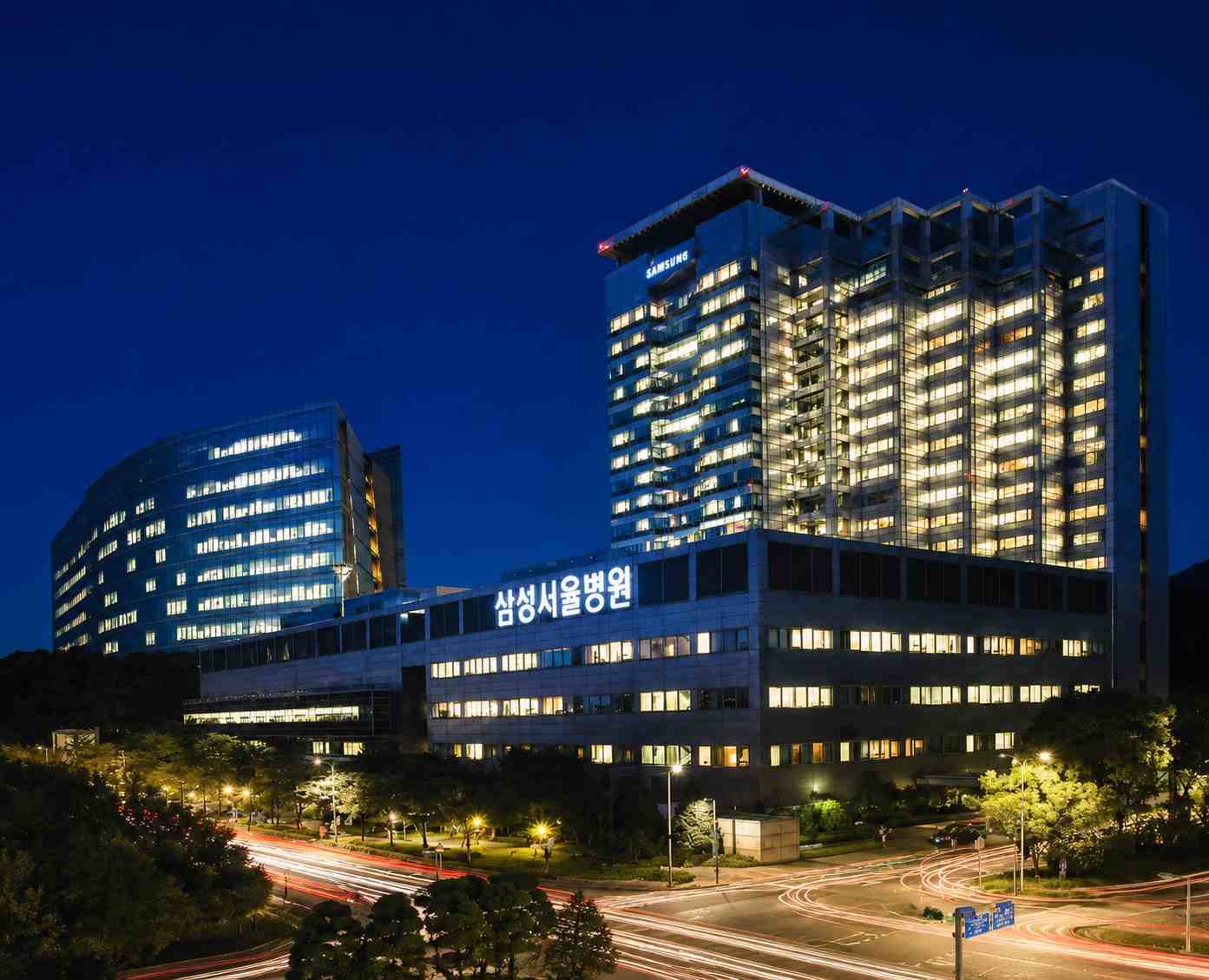
In the most dynamic district of Seoul, Samsung Medical Center (SMC) stands not merely as a treatment institution, but as a national symbol of medical excellence and a leading global hub for cancer research and treatment. Since its opening in 1994, this center has pursued a vision beyond conventional borders, committing itself to transforming healthcare through relentless innovation, an absolute patient‑centric focus, and deep integration of research and treatment.
Its Cancer Hospital, considered one of the largest and most equipped specialized centers in Asia, adopts an integrated philosophy encompassing all aspects of the fight against cancer — from prevention and ultra‑precise diagnosis to advanced personalized treatments and comprehensive supportive care.
Foundations of a Medical Giant: History and Infrastructure
Samsung Medical Center was established in 1994 and quickly became a cornerstone of South Korea’s healthcare system. By consistently achieving top rankings in national customer satisfaction indices, it has demonstrated that clinical excellence can be combined with a human and patient‑centered experience.
Its infrastructure development is equally impressive. The completion of the Proton Therapy Center in 2014 placed this hospital among the world’s most advanced institutions for proton therapy technology. The ambitious “Happinovation” vision led to the creation of a massive and unparalleled medical complex where complex treatments, translational research, and the training of future physicians take place in a fully synergistic environment. This unique ecosystem is the engine of clinical innovation.
The Beating Heart of the Center: An Integrated, Multidisciplinary Cancer Treatment System
Cancer treatment at Samsung Medical Center is a collective and super‑specialized process. Each patient is reviewed by a Tumor Board consisting of medical oncologists, surgical oncologists, radiation oncologists, interventional radiologists, pathologists, and specialized nurses. This multidisciplinary collaboration ensures that all angles of the disease are examined and that the most effective, least side‑effect treatment plan — often combining several modalities — is formulated.
The main pillars of the advanced oncology treatment system are:
· Ultra‑precise and Minimally Invasive Surgery: Advanced techniques such as robot‑assisted surgery (including the Da Vinci system) and laparoscopic surgery enable maximum tumor resection with minimal damage to healthy tissue.
· Nanometer‑precision Radiotherapy: A full spectrum of methods, from Image‑Guided Radiotherapy (IGRT) and Intensity‑Modulated Radiotherapy (IMRT) to advanced Proton Therapy, focuses radiation with extreme precision within the tumor volume while protecting surrounding healthy tissue.
· Innovative Systemic Treatments: Targeted Therapy based on each patient’s tumor genomic profile, advanced Immunotherapy (including checkpoint inhibitors such as PD‑1/PD‑L1), and intelligent chemotherapy following the latest global protocols.
· Interventional Radiology (Image‑Guided) Treatments: As one of the world’s most advanced departments, it performs vital minimally invasive procedures — including tumor ablation (radiofrequency, microwave, cryo), embolization, and image‑guided biopsies — with maximum accuracy, often serving as an alternative to open surgery and significantly reducing recovery time.
Radiology Department: The Indispensable Eye for Diagnosis and Treatment
The Radiology Department of Samsung Medical Center is a brilliant example of technological power in the service of precision medicine. With over 85 board‑certified radiologists organized by organ systems (Thoracic, Neuroradiology, Breast, Abdominopelvic, and others), it enables peerless diagnostic capability.
· Ultra‑precise Diagnosis: Equipped with 17 CT scanners, 15 MRI units, and 8 angiography suites, the center possesses one of Korea’s most extensive imaging infrastructures. Protocols such as ultra‑low‑dose high‑resolution CT for lung imaging and stress cardiac MRI — pioneered in Korea — have revolutionized diagnostic accuracy.
· Image‑Guided Biopsy and Treatment: Unique techniques, such as the improved core needle biopsy (CNB) developed and validated at this center, have been shown to increase diagnostic accuracy for certain lesions up to 94%. MRI‑guided breast biopsies and image‑guided ablation of liver and kidney tumors are performed routinely.
· One‑Stop Care: The center has established specialized diagnostic outpatient clinics where patients can undergo imaging, biopsy, and even initial consultation in a single day and location — dramatically reducing anxiety and waiting time.
Translational Research and Access to Future Treatments
Samsung Medical Center is not just a hospital; it is an advanced medical sciences ecosystem. Its close connection with its own research institute, combined with the extensive network of Samsung Biologics (the world’s largest biologics contract manufacturing organization) and Samsung Bioepis (a leading developer of biosimilar drugs in oncology and immunology), provides an exceptional position.
· Phase I Clinical Trials: Patients at this center are often among the first in the world to access novel targeted drugs, bispecific antibodies, and antibody‑drug conjugates (ADCs).
· Genomic‑Based Personalized Medicine: Through next‑generation sequencing (NGS) and advanced bioinformatics analysis, treatment is designed based on the unique molecular defects of each tumor.
Medical Talent: Gathering the Best from Around the World
The quality of a treatment center is defined by its specialists. Samsung Medical Center is home to a significant number of internationally renowned oncology figures.
Key leaders include:
· Leaders in Medical Oncology and Hematology: Specialists who play a central role in designing new treatment protocols and immunotherapies for blood cancers and solid tumors.
· First‑tier Surgical Oncologists: Particularly outstanding in complex areas such as gastrointestinal cancer surgery, thoracic tumors, and limb‑preservation surgery (sarcomas).
· Pioneering Radiation Oncologists: Leaders in proton therapy and stereotactic body radiotherapy (SBRT) programs, with papers published in prestigious international journals.
· Expert Interventional Radiologists: Specialists who have developed and published innovative biopsy techniques — an excellent example of applied research serving clinical practice.
Caring for the Whole Human: Psychosocial Approach and Palliative Support
Samsung Medical Center understands that cancer is not merely a physical disease. The Comprehensive Supportive and Palliative Care Program begins from the moment of diagnosis.
· Psycho‑oncology: A team of psychiatrists, psychologists, and social workers assists patients and their families — individually and in groups — to manage anxiety, depression, and stress arising from the illness.
· Specialized Symptom Management: Scientific and empathetic control of symptoms such as pain, nausea, fatigue, and appetite loss helps preserve quality of life.
· Cancer Rehabilitation: Specialized physiotherapy and occupational therapy programs help restore strength and independence after treatment.
· Oncology Nutrition: Personalized nutritional counseling to manage treatment side effects and maintain physical strength.
International Services and Contact Information
Samsung Medical Center welcomes patients from around the world. Its International Healthcare Center manages all steps — from document translation and appointment coordination to accommodation and simultaneous interpretation during treatment.
· Address:
Samsung Medical Center, 81 Irwon‑ro, Gangnam‑gu, Seoul, 06351, South Korea
· Official Website (English): www.samsunghospital.com/en/
· Radiology Department Website (English): www.samsunghospital.com/en/departments/radiology.do
· International Inquiries and Appointments: Contact through the main website’s international patient page.
Conclusion: A Global Destination for Hope and Health
Samsung Medical Center Seoul is an unparalleled combination of scale, expertise, technology, and humanity. By bringing together the world’s best specialists, the most advanced diagnostic and treatment technologies, a powerful translational research system, and a deeply patient‑centered care model, it offers not just a treatment option, but a powerful partnership in the challenging journey against cancer.
Choosing this center means choosing access to the frontiers of today’s and tomorrow’s global oncology — in an environment where patient dignity, peace, and hope guide every decision.