
National Hospital for Neurology and Neurosurgery London: A Leading Global Centre for Neuroscience
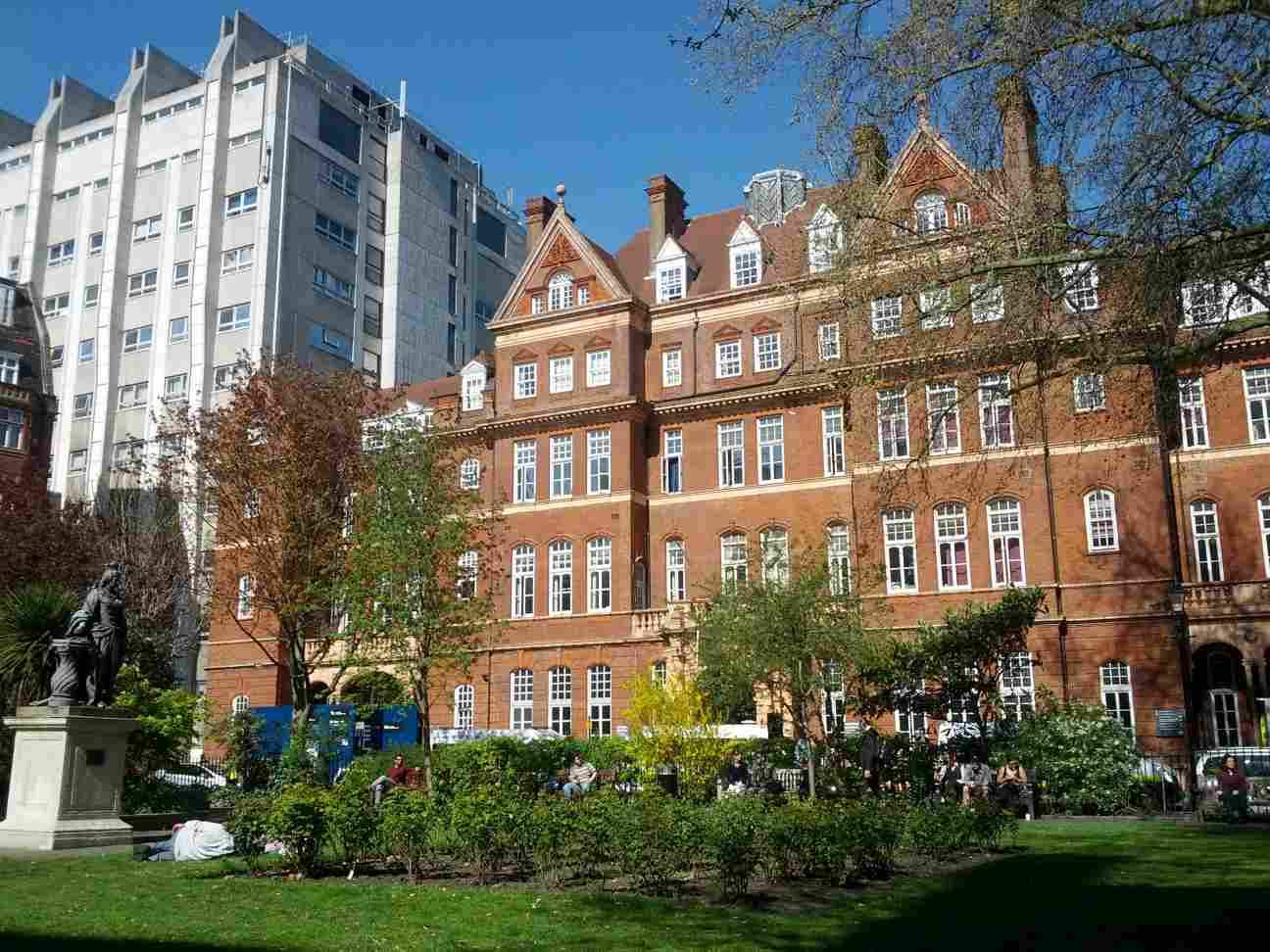
In the heart of London, in historic Queen Square, stands a hospital that is not only a medical centre but also a legend in the world of neuroscience. The National Hospital for Neurology and Neurosurgery, also known as “Queen Square,” was the first specialist hospital in England devoted exclusively to the treatment of disorders of the nervous system. Today, this centre is recognised as the largest specialist neuroscience hospital in the United Kingdom and one of the world’s most distinguished institutions in this field.
With a history spanning nearly 160 years, this hospital represents an exceptional combination of heritage, profound clinical expertise, and the most advanced neuroscience research. Its close connection with the UCL Queen Square Institute of Neurology, located on the same site, has created a unique ecosystem where laboratory discoveries are translated with remarkable speed into innovative treatments for patients. Neurology at this university ranks first in Europe and second in the world in global rankings, reflecting the outstanding academic strength of this institution.
Comprehensive Introduction to the Hospital and Its Specialist Services
The National Hospital for Neurology and Neurosurgery treats a very large number of patients every year with the most complex neurological conditions. This centre treats more than 6,000 inpatients, 120,000 outpatients, and 8,000 day cases annually. These figures reflect not only the scale of the hospital’s operations but also the level of trust it enjoys among the medical community and patients from around the world.
Broad Range of Services and Highly Specialised Centres
With 276 inpatient beds and 70 outpatient consultation rooms, this hospital provides comprehensive services for all conditions affecting the brain, spinal cord, peripheral nervous system, and muscles. The primary focus is on highly specialised treatments, and patients can benefit from an extensive network of specialist clinics.
Among the hospital’s notable centres and services are the following:
· Hyper‑Acute Stroke Unit (HASU): providing specialist and immediate care for stroke patients.
· Brain Tumour Centre: comprehensive diagnosis and treatment of all types of brain tumours using the most advanced methods.
· National Prion Clinic: one of the world’s leading centres for the treatment of rare prion diseases.
· Acute Brain Injury Unit: providing specialised care for patients with traumatic brain injuries.
· Pioneering neurorehabilitation services: focused, patient‑centred rehabilitation programmes aimed at achieving maximum functional recovery.
· Specialist centres for epilepsy, multiple sclerosis, dementia, and muscle disorders.
· The largest neurosurgical intensive care unit and the only neurology‑led intensive care unit in the country.
Advanced Diagnostic and Therapeutic Facilities and Technologies
Queen Square Hospital has always been at the forefront of adopting advanced medical technologies. This centre is equipped with:
· The first interventional MRI scanner in the United Kingdom, enabling precise surgical procedures under live imaging guidance.
· 6 equipped operating theatres, including two angiography suites.
· Gamma Knife technology for radiosurgery on brain tumours and vascular malformations without the need for a surgical incision.
· The Wolfson Centre for Experimental Neurology, based within the hospital itself, which focuses specifically on understanding and treating neurodegenerative diseases such as Alzheimer’s disease and Parkinson’s disease.
Medical Team: Bringing Together the World’s Best
The beating heart of this hospital is its specialists and surgeons, each of whom is regarded as a leading international figure in his or her field. More than 100 consultant posts are active at this hospital, and they also participate in a collaborative network with other major London centres such as Great Ormond Street Hospital (children), Moorfields Eye Hospital (ophthalmology), and Royal Free Hospital.
Structure of the Specialist Teams
The hospital’s teams work in a multidisciplinary manner to design the best treatment plan for each patient. These teams include:
· Neurologists: responsible for diagnosis, medical management, and non‑surgical treatment of neurological disorders.
· Neurosurgeons: specialists in performing surgical procedures on the brain, spinal cord, and peripheral nerves.
· Neuroradiologists: specialists in the advanced interpretation of neuroimaging such as MRI and CT scans.
· Clinical neurophysiology specialists: responsible for performing and interpreting EEG, nerve conduction studies, electromyography, and other electrodiagnostic tests.
· Neurorehabilitation teams: including physiotherapists, occupational therapists, and speech and language therapists specialising in the recovery of neurological patients.
· Neuropsychology specialists: assessing and improving cognitive functions such as memory and concentration following brain injuries.
Key Specialist Areas of the Physicians
The physicians at this hospital work across more than 50 subspecialty areas. Some of these key areas include:
· Brain tumour and skull base surgery
· Functional surgery and deep brain stimulation (DBS) for Parkinson’s disease and tremor
· Epilepsy surgery and congenital cerebrovascular malformations
· Minimally invasive and endovascular spine surgery
· Specialist management of multiple sclerosis (MS) and neuroimmunological diseases
· Diagnosis and treatment of neurodegenerative diseases (dementia, ALS)
· Management of chronic and complex headaches
Important note: Due to the exceptional breadth and highly specialised nature of this hospital’s medical team, which includes hundreds of specialists and subspecialists, it is not possible to list all names and profiles here. To identify the physician most relevant to your specific condition, the best approach is to use the doctor search service on the hospital’s official website or contact the admissions department.
Contact Information and Appointment Booking
Access to this hospital’s specialist services is available through the UK National Health Service (NHS) as well as through its private services division.
Main Contact Information
· Exact address: National Hospital for Neurology & Neurosurgery, Queen Square, London, WC1N 3BG.
Appointment Booking
· Through the NHS: this usually requires a referral from a General Practitioner (GP) or another specialist within the NHS system. Your treating physician will send the referral to the hospital.
· Private Patients: international patients or individuals who wish to use private services can contact the hospital’s private division directly. This division has private consulting rooms at 23 Queen Square and a dedicated inpatient ward called “Bloomsbury,” which has recently been refurbished. Please note that this division does not provide services for children.
Access and Transport Routes
The hospital is located in central London and is very easy to access:
· Nearest Underground stations: Russell Square (Piccadilly line) and Holborn (Central and Piccadilly lines) are within walking distance.
· Main railway stations: Euston, King’s Cross, and St Pancras can be reached in approximately 15 minutes on foot.
· Bus: numerous routes including 59, 68, 91, 168, 188, 501 stop on Southampton Row, and routes 19, 38, 55, 243 stop on Theobalds Road.
· Parking: parking around the square is limited. There are several public parking spaces and an NCP underground car park in Brunswick Square. Please note that this area is within London’s Congestion Charge zone and Ultra Low Emission Zone (ULEZ).
Rich History: From 1859 to the Present
The history of this hospital is closely intertwined with the history of modern neurology. The centre was founded in 1859 under the name “The National Hospital for the Paralysed and Epileptic.” Over the years, it has hosted many of the great figures in neurology, including John Hughlings Jackson, one of the founders of epilepsy research. The architecture of the hospital’s main sections was completed in the 1880s and inaugurated by members of the royal family. During World War I, the hospital served as a general hospital, and during World War II it was damaged by bombing. The hospital’s current name became official in 1990, and since 1994 it has operated as part of the UCLH NHS Foundation Trust.
Final Words: Choosing a Global Centre for Complex Neurological Challenges
The National Hospital for Neurology and Neurosurgery London is not just another name on a list of hospitals. This centre is a historic institution, a leading research hub, and a source of hope for thousands of patients with difficult neurological conditions. Its combination of exceptional expertise, access to the latest technologies, translational research, and experienced multidisciplinary teams has made it a premier international destination. If you or your loved ones are facing a complex neurological disease, Queen Square Hospital can offer a light of hope and the possibility of accessing the best care available.